Ingredients
Equipment
Method
- Add ingredients to the bread machine pan in the order recommended by your machine. A common order is: water, olive oil, sugar, salt, flour, then yeast on top (keep yeast away from liquid at first).
- Select the DOUGH cycle and start. Check the dough after 5 to 10 minutes of mixing: it should form a smooth, slightly tacky ball. If it looks dry and shaggy, add water 1 tsp at a time. If it looks loose or puddly, add flour 1 tbsp at a time.
- When the dough cycle finishes (typically 1 hour 20 minutes to 1 hour 50 minutes), lightly oil your hands and turn the dough onto a lightly floured surface.
- For two pizzas: divide into 2 equal pieces (about 430 g each). For three thinner pizzas: divide into 3 equal pieces (about 285 g each). Shape each piece into a tight ball, cover, and rest 10 to 20 minutes so the gluten relaxes.
- Preheat the oven to 250 to 290°C (480 to 550°F), or as hot as your oven allows. Place a pizza stone, steel, or an inverted heavy baking tray inside while the oven heats for at least 20 to 30 minutes.
- Stretch or roll the dough to your desired thickness. For a crisper base, aim for 3 to 5 mm thick (about 1/8 to 3/16 inch).
- Transfer to baking paper or a floured peel. Add sauce and toppings lightly, too much topping can soften the crust.
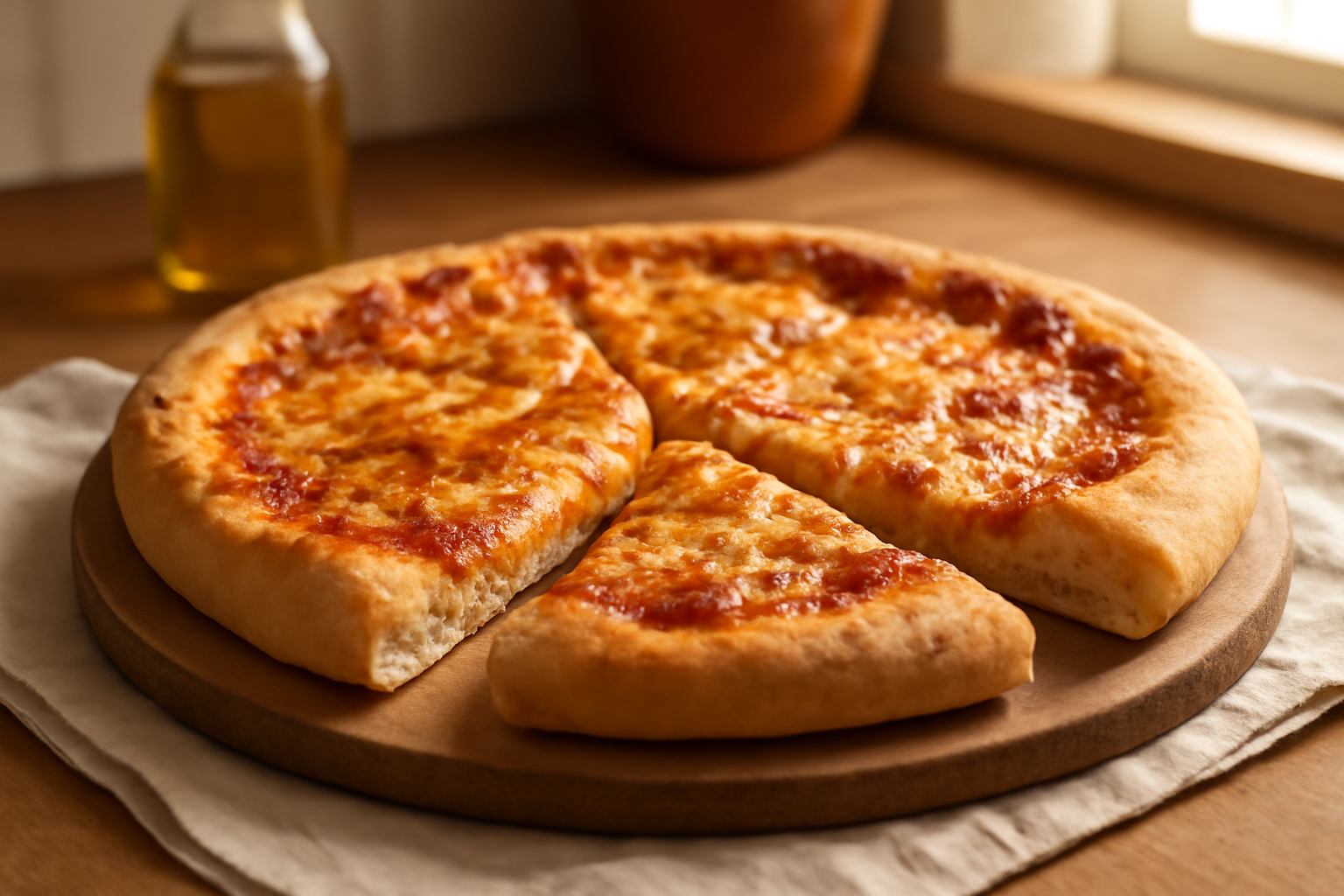
- Bake on the hot surface until deeply browned at the edges and cooked through, about 7 to 12 minutes depending on oven heat and thickness. Cool 2 minutes, slice, and serve.
Notes
Use the DOUGH cycle only, this recipe is meant to be baked in an oven, not as a loaf.
If your machine has a ‘Pizza Dough’ program, use it. Otherwise, any standard Dough cycle works.
Flour absorption varies widely. Always check the dough early in mixing and adjust with small amounts of water or flour. Tips:
- For extra crispness: bake on a preheated stone or steel, or on an inverted heavy tray, and keep toppings moderate.
- If the dough springs back while shaping, cover and rest 10 minutes, then continue stretching.
- For a lightly blistered rim: stretch by hand rather than rolling, and bake at the highest safe oven temperature.
- To make ahead: after the dough cycle, cover and refrigerate 12 to 48 hours. Let it sit at room temperature 45 to 90 minutes before stretching.
- Freezer option: lightly oil dough balls, seal in freezer bags, freeze up to 2 months. Thaw overnight in the fridge, then rest at room temperature before shaping. Approximate nutrition, will vary with flour brand and portion size. Values are for dough only, excluding toppings.
If your machine has a ‘Pizza Dough’ program, use it. Otherwise, any standard Dough cycle works.
Flour absorption varies widely. Always check the dough early in mixing and adjust with small amounts of water or flour. Tips:
- For extra crispness: bake on a preheated stone or steel, or on an inverted heavy tray, and keep toppings moderate.
- If the dough springs back while shaping, cover and rest 10 minutes, then continue stretching.
- For a lightly blistered rim: stretch by hand rather than rolling, and bake at the highest safe oven temperature.
- To make ahead: after the dough cycle, cover and refrigerate 12 to 48 hours. Let it sit at room temperature 45 to 90 minutes before stretching.
- Freezer option: lightly oil dough balls, seal in freezer bags, freeze up to 2 months. Thaw overnight in the fridge, then rest at room temperature before shaping. Approximate nutrition, will vary with flour brand and portion size. Values are for dough only, excluding toppings.